
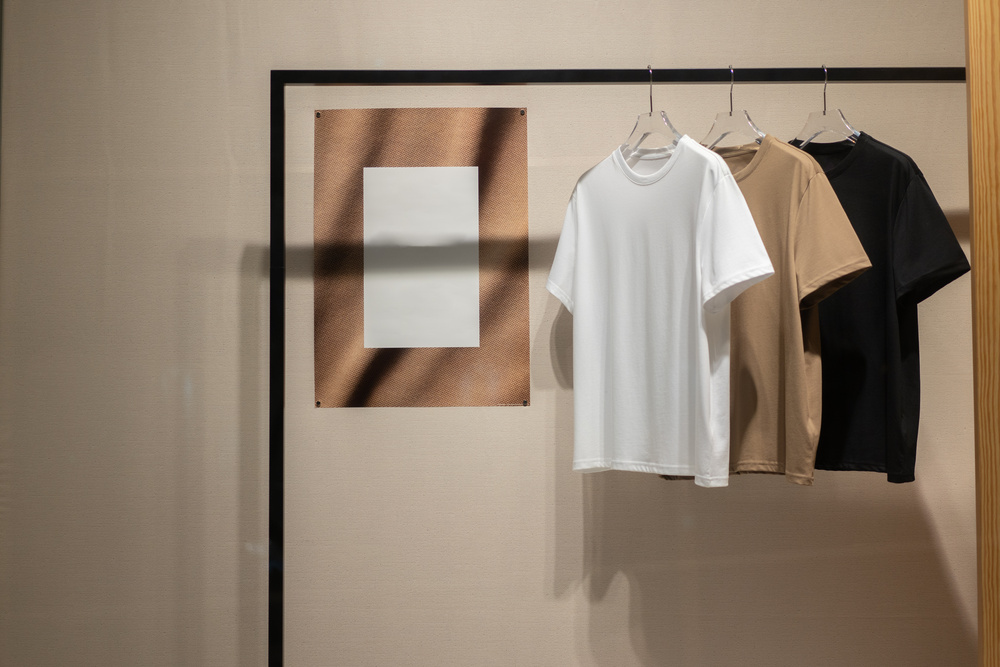
When I was a kid, t-shirts were underwear. It wasn’t complicated. My father made me and my brothers wear t-shirts under our collared shirts because “that’s what clean-cut, American boys do.” T-shirts had become casual outerwear by the time I hit middle school in the mid-1970s. By the time high school rolled around, all my friends were wearing t-shirts as daily articles of clothing.
Back then, t-shirts were still pretty simple. You could get them plain or with graphics on them. You could also get them with either a crew or V-neck. That was about it. Fashion experts were not writing long-winded articles about how to wear a t-shirt and still be stylish. Society wasn’t offended by a t-shirt that had a message some people didn’t like. It was a better time.
So what happened? The internet. It ushered in the information age and, along with it, gave a lot more people a lot more input into what defines our culture. The result is a mishmash of millions of opinions and not much uniformity. Something as simple as the t-shirt has become far more complex than it needs to be.
There Are Style Rules
One of the first things I learned in researching this article was that there are now style rules for wearing t-shirts. For example, a plain t-shirt is fine with a sport coat and a pair of dress slacks. Not so much for a graphic t-shirt. If I want to wear my Umai anime t-shirts in a casual setting without a sports coat, that’s fine. But I am never to put a sport coat over a t-shirt adorned with graphics. At least that is what the experts say.
There are also rules about when a t-shirt should be tucked and left free. Most of the time, we men are supposed to go free. And heaven forbid we wear a plain, white V-neck as anything other than an undergarment. Only colors should be visible.
There Are Message Rules
Even more convoluted are the rules about messaging. They change based on who you hang around with. If you and your friends all have a similar outlook on life, you can wear t-shirts with messages that support that outlook. Just be aware that your messaging might offend someone else.
There are people with all sorts of opinions who thrive on agitating others. They wear t-shirts with messages they know will set people off. The rest of us brand such people as social troublemakers. But what if our own t-shirts are offensive? Do we consider ourselves troublemakers, or are we just standing up for what is right?
The Definition Has Been Expanded
Perhaps the most confusing thing to me is the fact that the definition of the t-shirt has been expanded. It used to be that t-shirts could only have crew or V-necks. This is no longer the case. If you doubt me, just take a look at Amazon. Search for t-shirts and you will find dozens of neck options displayed in the left column.
T-shirts used to be short-sleeved only. That has changed, too. Now you can get a long sleeve, three-quarter length, and elbow-length sleeves and still have a t-shirt. If you are a woman and so inclined, you can even get yourself a t-shirt dress. The possibilities are almost endless.
I remember when t-shirts were just underwear. Those were simpler times. Unfortunately, there is no going back. As the t-shirt has changed, so has everything else. That’s the nature of the world. It keeps turning and changing despite our best efforts to cling on to the past.
